Saskatchewan licenses mortgage brokers, associates, brokerages and administrators through the Financial and Consumer Affairs Authority (FCAA). Registering a mortgage costs a tiered Information Services Corporation fee, $200 for loans under $250,000 from April 15, 2026, and the province has no land transfer tax. A lender must get leave of the Court of King's Bench before it can start a foreclosure on most homes.
Saskatchewan mortgages 90 or more days behind, June 2026
Broker, associate, brokerage, administratorAs of FCAA licensing pages.Source
On this page
Saskatchewan has a short list of rules that matter to a borrower: one provincial licensing body, a registration fee that comes in four steps, no land transfer tax, and a foreclosure system that puts a judge in front of the lender before anything else happens.
Licences from the FCAA
The Financial and Consumer Affairs Authority licenses mortgage brokers in Saskatchewan. Its pages say anyone who wants to broker mortgages in the province must apply for a licence, that individuals may broker only on behalf of the brokerage named on their licence, and that new entrants begin as associates. A broker licence requires more experience as an associate unless the applicant is exempt, for example through a licence in another province.
The FCAA offers a searchable list of mortgage brokers licensed in Saskatchewan. Use it. Check the name, check the brokerage, and ask the person what their licence lets them do. A lender lending its own money is not the same thing as a broker placing your file.
What registration costs, and why there is no transfer tax
Information Services Corporation sets the fee for registering a mortgage. From April 15, 2026 it is $200 for mortgages up to $249,999.99, $275 from $250,000 to $500,000, $525 from $500,000.01 to $750,000 and $775 from $750,000.01 to $1,000,000. Amending or assigning a mortgage is $60. We found no land transfer tax in the province.
Most of what you pay is not registration. Interest, the lender fee, the broker fee, the appraisal and your lawyer make up the real cost, and the first example shows how small the registration line is in comparison. The second example shows another trap: a lower rate can still cost more once the fee is added. Our costs and fees page lists the common lines.
Private lending and the comparison that matters
We could not find an official Saskatchewan figure for the share of mortgages that private lenders write, so we do not quote one. If a bank has said no, a private lender may be an option. Get two or three offers in writing, compare the cost over the term you expect to need, and ask what the exit looks like. If your credit is the reason, ask whether waiting and repairing it is cheaper than the extra interest.
Arrears and the regional picture
In CMHC’s Fall 2026 report, Saskatchewan’s June 2026 figure was 0.46% of mortgages 90 or more days behind. That is the highest of the provinces the report charts monthly in the pages we read, ahead of Manitoba at 0.34%, Alberta at 0.27% and British Columbia at 0.26%. CMHC expects delinquencies to remain broadly stable in provinces outside Ontario, British Columbia and Atlantic Canada.
A higher level than neighbouring provinces does not mean trouble for every household, and it is not a forecast. If you are behind on payments, the useful step is to contact the lender before the arrears reach 90 days, since that is the point at which these statistics start to count a mortgage.
What happens if you fall behind
Saskatchewan treats foreclosure as a court matter. According to the Law Society’s overview, a lender generally cannot begin an action for foreclosure, sale or possession of a home without first getting leave of the Court of King’s Bench under The Land Contracts (Actions) Act, 2018, and notice of the application goes to the Provincial Mediation Board. The court sets what is owed and a date by which to catch up. If you do not, the lender can ask for a final order of foreclosure.
The Law Society’s overview says redemption periods range from about a week to six months depending on equity, and a 2014 report by the province’s Law Reform Commission put the average at three months. Those are patterns, not promises. The Law Society also notes that a purchase money mortgage limits a lender to the land, a protection that generally does not extend to a refinance or second mortgage, and that corporations commonly waive it. Ask a lawyer how your own paperwork reads. Our forced sale guide compares this with power of sale provinces.
If a notice arrives, do not wait to see whether it goes away. Mark the dates, keep every page, and speak to a lawyer in the same week. The province also has a Provincial Mediation Board that receives notice of these applications, and a lawyer can tell you whether it can help in your case. Early action keeps more choices open than any later step does.
Questions to put to a Saskatchewan broker or lender
Are you licensed with the FCAA, and for which brokerage?
Is the lender private, and who are they?
What are all the fees in dollars, and what is due at the end of the term?
What does a renewal cost, and what happens if I cannot renew?
If I miss a payment, what notice will I get and from whom?
Other routes worth checking
Ask a bank or credit union about refinancing or a home equity line first, and ask a Licensed Insolvency Trustee whether a consumer proposal handles unsecured debt more cheaply than a second mortgage. Selling the home is an honest option if payments cannot hold. Use the calculator with real fees in it before you commit.
Where to start by city
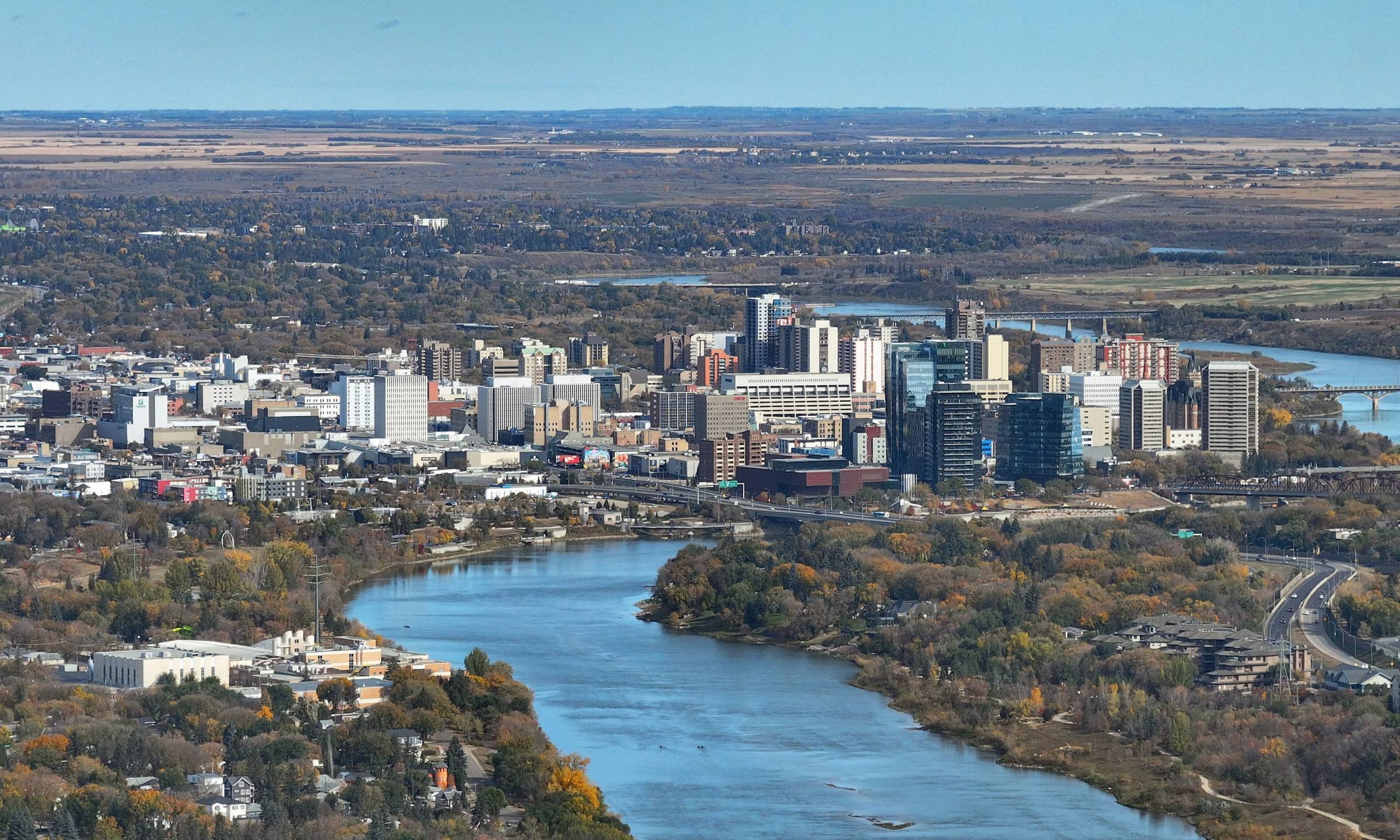
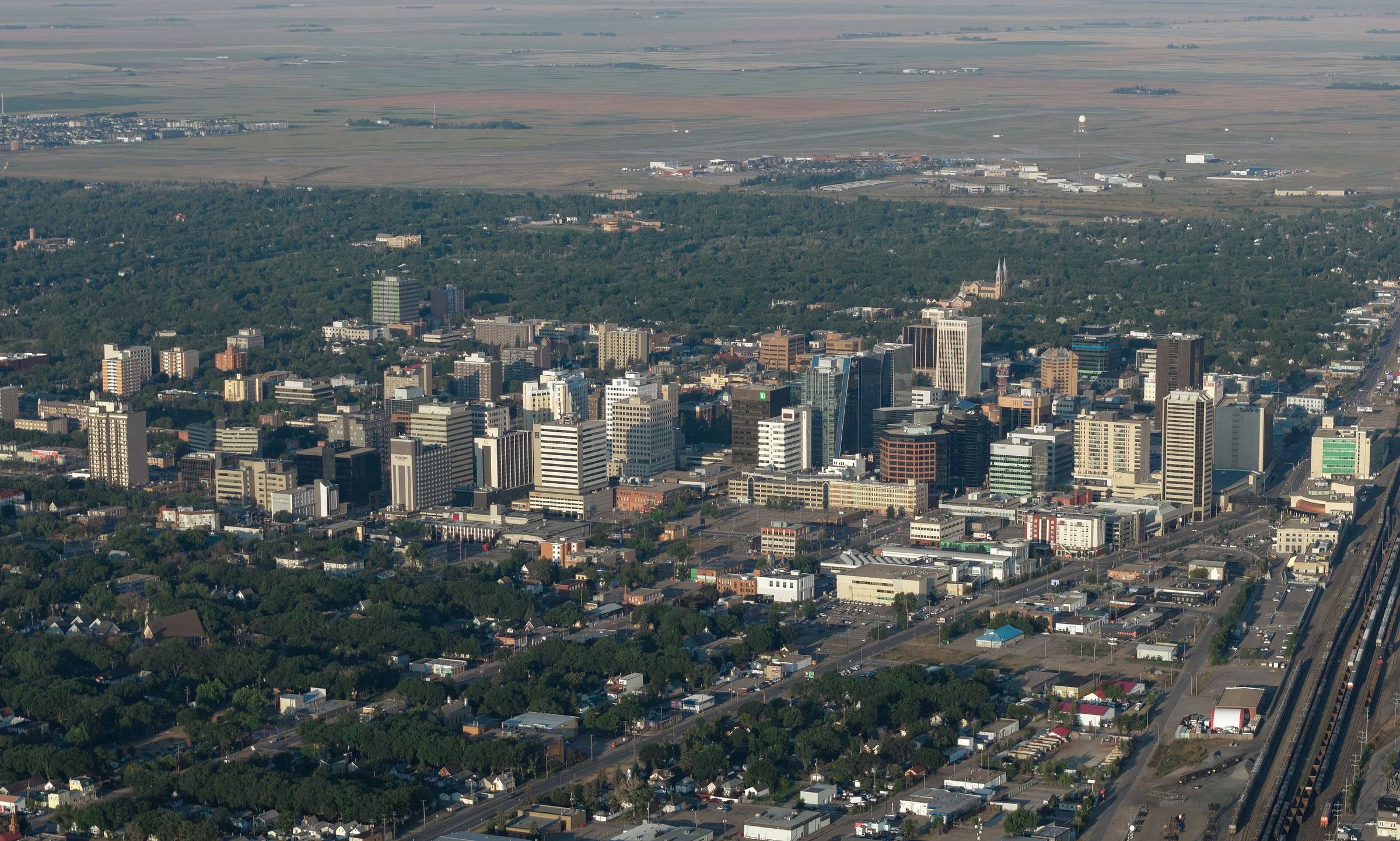
Saskatoon and Regina are the two main markets, and the rest of the province prices differently again. The city pages give sourced local figures, starting with Saskatoon and Regina. The form at check my options covers every Saskatchewan community.
Land transfer tax and registration in Saskatchewan
Saskatchewan does not charge a land transfer tax. The Information Services Corporation (ISC) charges registration fees instead, including a title transfer fee that ISC's Land Titles fee table puts at 0.4% of the value of the title ($4 per $1,000) for values over $6,300. A mortgage is registered at a tiered flat fee, not a percentage of the loan, so the cost of registering a second mortgage is modest.
ISC's fee adjustments effective April 15, 2026 set the mortgage registration fee at $200 for mortgages up to $249,999.99, $275 from $250,000 to $500,000, $525 from $500,000.01 to $750,000 and $775 from $750,000.01 to $1,000,000. Amending or assigning a mortgage is $60. Your lawyer adds their own fees and any title insurance.
An $85,000 second mortgage on a $480,000 Saskatchewan home
Made-up figures except the registration fee, which is ISC's $200 fee for mortgages under $250,000 from April 15, 2026. The first mortgage is $260,000. The loan is interest only at an assumed 12.5% for one year, with an assumed 2% lender fee, a 1% broker fee and $2,100 for legal and appraisal.
Combined loan-to-value
71.9%
$345,000 owed on a $480,000 home
Interest for a year
$10,625
$85,000 at 12.5%
Lender fee
$1,700
2% of $85,000
Broker fee
$850
1% of $85,000
Legal and appraisal
$2,100
ISC registration fee
$200
Cost of borrowing in year one
$15,475
Two offers on a $60,000 loan: lower rate and high fee against higher rate and low fee
Made-up figures. Both loans are interest only for one year. Offer A is an assumed 11% with a 4% lender fee. Offer B is an assumed 13% with a 1% lender fee. The registration fee is the same on both, so it is left out.
Offer A interest
$6,600
$60,000 at 11%
Offer A lender fee
$2,400
4% of $60,000
Offer B interest
$7,800
$60,000 at 13%
Offer B lender fee
$600
1% of $60,000
Offer B is cheaper over one year by
$600
Questions people ask
Who must be licensed to arrange a mortgage in Saskatchewan?
The FCAA says anyone who wants to broker mortgages in the province must apply for a licence, and that individuals may broker only for the brokerage named on their licence. New entrants start as associates. The FCAA publishes a searchable list of licensed brokers you can check.
How much does it cost to register a second mortgage in Saskatchewan?
ISC's tiers from April 15, 2026 are $200 for mortgages under $250,000 and $275 from $250,000 to $500,000, rising to $525 and $775 in the next two tiers. It is a flat fee within each tier. Lawyer, appraisal, lender and broker costs are separate.
Why does Saskatchewan need a court's permission before foreclosure?
Under The Land Contracts (Actions) Act, 2018, a lender generally cannot start an action for foreclosure, sale or possession of a home without leave of the Court of King's Bench, and notice of the application goes to the Provincial Mediation Board. The Law Society's overview describes this step.
Can a Saskatchewan lender chase me for a shortfall after foreclosure?
It depends on the loan. The Law Society's overview says a purchase money mortgage limits the lender to the land, while a refinance or second mortgage is generally not protected in the same way, and that a final order of foreclosure ends the debt secured by the mortgage. Ask a lawyer about your documents.
Why is Saskatchewan's arrears figure higher than its neighbours'?
CMHC's June 2026 monthly series shows Saskatchewan at 0.46%, against 0.34% in Manitoba and 0.27% in Alberta. The report does not explain the gap in the pages we read, so treat it as a fact about the level, not a forecast for your own mortgage.