Alberta has no land transfer tax, and mortgage professionals are licensed by the Real Estate Council of Alberta (RECA). Registering a mortgage at Land Titles carries a levy of $5 per $5,000 since October 20, 2024. If you fall behind, Alberta lenders go to court, and the redemption period is generally six months, or one year for farmland.
6 months (1 year for farmland)As of Torys, August 2023.Source
CMHC outlook for Alberta arrears
Improving, expected stable to mid-2027As of October 27, 2026.Source
On this page
Alberta is a no land transfer tax province with a court-driven approach to enforcement, which makes it quite different from its neighbours to the west and east. The practical differences are in who licenses the broker, how little Land Titles charges, and how long a redemption period gives you.
RECA licenses the people who arrange mortgages
The Real Estate Council of Alberta regulates mortgage brokers under the Real Estate Act. Section 17 says no person may deal as a mortgage broker unless they hold the right licence issued for that industry. The Act defines the work broadly: for compensation and on another person’s behalf, soliciting someone to borrow or lend money secured by a mortgage, negotiating a mortgage deal, collecting payments, or buying and selling mortgages, or holding yourself out as doing so.
Banks, credit unions and similar institutions are exempt, as are members of the Law Society of Alberta acting as lawyers. A private lender lending its own money is a different matter from a broker placing your file, so ask which one you are speaking to. RECA publishes a public lookup, called ProCheck, so you can confirm a licence yourself. Check the licence before you share your income or title documents, because those papers can be misused in the wrong hands.
Land Titles costs: no tax, but a levy
Nothing in Alberta is called a land transfer tax. Land Titles charges registration fees, and the government page we read says a levy applies to registrations received on or after October 20, 2024: $5 per $5,000 for a mortgage, compared with $1.50 per $5,000 before. The page does not give a full fee formula and refers readers to the Tariff of Fees Regulation, so a base fee sits on top of the levy.
On a $60,000 second mortgage, the levy alone is $60. Lender fees, a broker fee, an appraisal and your lawyer cost far more, as the first example shows. If you are comparing offers, ask each one to list every closing cost in dollars. Our costs and fees page lists the common ones.
Private lending is its own category
Private lenders sit alongside banks and credit unions here. We could not find an official Alberta figure for private lenders’ share of mortgages, so we do not quote one. If a bank turns you down, a private lender is a real option, and the loan may be short, so the question that matters most is how you will repay or refinance it at the end of the term. The point is to price two or three, ask about the term and the exit, and keep the costs from piling up on a short loan.
Arrears are low and moving the other way from Ontario
In its Fall 2026 report, CMHC put Alberta mortgages 90 or more days behind at 0.27% in the second quarter of 2026. It says Alberta continues to improve, supported by stronger regional economic conditions and higher energy prices, and it expects arrears to stay stable through mid-2027. CMHC’s analysis groups Alberta with Saskatchewan as places where arrears have declined.
Good news in the data is not a reason to borrow. It is a reason to try your bank or credit union first, and to ask what it would take to qualify there before you pay private lender prices.
When payments stop: foreclosure in Alberta
Alberta lenders enforce through the court under the Law of Property Act. Torys calls foreclosure a remedy of last resort here, with a lean toward judicial sale where the home is worth more than the debt. The redemption period is generally six months from the date of the order, or one year for farmland, and Torys gives 20 days to respond to a claim served in Alberta.
A judge can vary the period, so the order in your own file is the one that governs. Court orders also tend to set out the amount owing, the costs added and who has conduct of the sale, so read every line and ask your lawyer what each one means before the clock starts to run down. The second example shows how arrears grow over a long period. Our forced sale guide compares this with power of sale provinces, and a lawyer is the right first call if you have been served.
Questions for an Alberta broker or lender
What is your RECA licence class, and can I see it on ProCheck?
Are you placing my file with a lender, or lending your own money?
What are every fee and the interest in dollars, and what is due at the end of the term?
What does a renewal or extension cost?
Who is my lawyer acting for on closing?
Weigh the alternatives first
Before a private second mortgage, ask a bank or credit union about a refinance or a home equity line, and ask a Licensed Insolvency Trustee whether a consumer proposal fits if unsecured debt is the problem. Selling the home is an honest option when the payments will not hold. Use the calculator with real fees entered before you decide.
Where to start by city
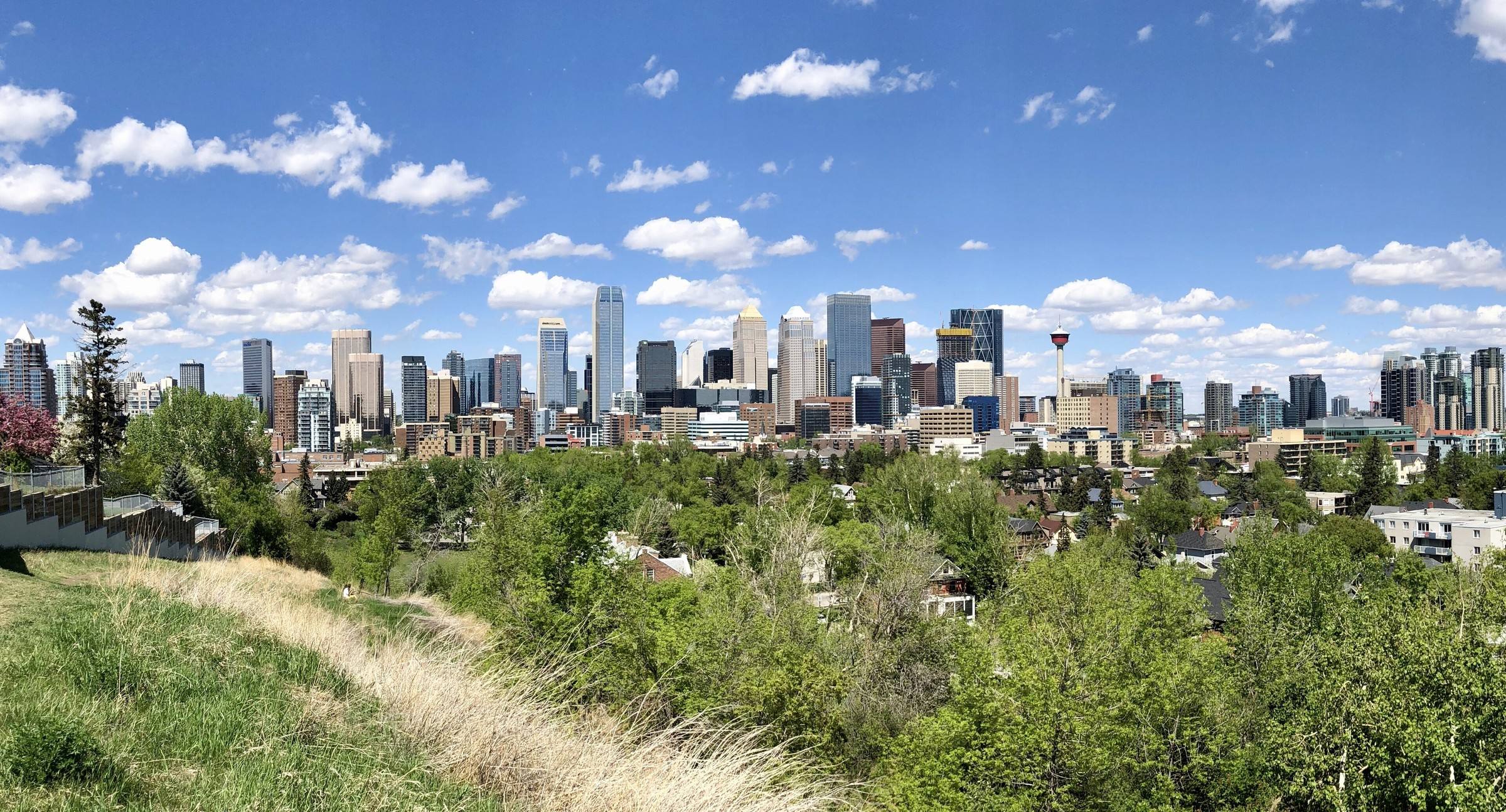
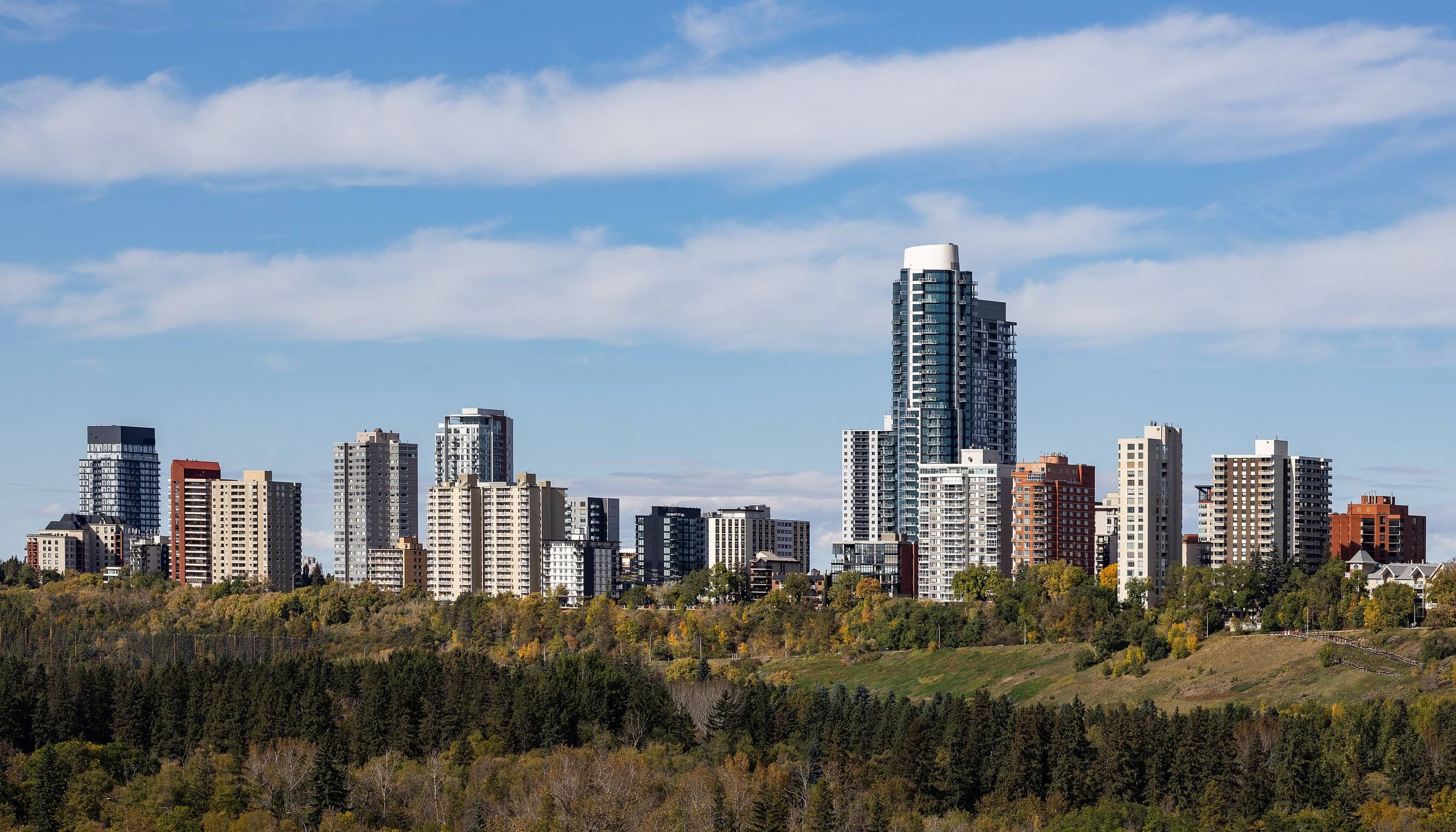
Calgary and Edmonton make up most of the province’s market, but Red Deer, Lethbridge and the northern centres have their own price levels. Local figures sit on the city pages, starting with Calgary and Edmonton. The form at check my options works for any Alberta community.
Land transfer tax and registration in Alberta
Alberta does not charge a land transfer tax. Land Titles charges registration fees instead, and since October 20, 2024 the registration levy on a mortgage is $5 for each $5,000 of value, up from $1.50. The Alberta government page we read lists the levy rate and sends readers to the Tariff of Fees Regulation for the full fee, so a base registration fee also applies.
For mortgage registrations received on or after October 20, 2024, alberta.ca lists the levy at $5 per $5,000, up from $1.50 per $5,000 before that date. Ask your lawyer for the total Land Titles charge on your file, which also includes the base fee set in the Tariff of Fees Regulation, plus their own fees.
A $60,000 second mortgage on a $520,000 Alberta home, with the Land Titles levy shown
Made-up figures except the levy, which is the $5 per $5,000 rate on alberta.ca for registrations since October 20, 2024. The base Land Titles fee is not included because we did not confirm its amount. The first mortgage is $300,000. The loan is interest only at an assumed 13% for one year, with an assumed 3% lender fee, a $1,200 broker fee, and $1,500 for legal and appraisal.
Combined loan-to-value
69.2%
$360,000 owed on a $520,000 home, rounded
Interest for a year
$7,800
$60,000 at 13%
Lender fee
$1,800
3% of $60,000
Broker fee
$1,200
Legal and appraisal
$1,500
Land Titles levy only
$60
$60,000 is 12 blocks of $5,000, at $5 each
Cost of borrowing in year one, excluding the base fee
$12,360
A farm owner who misses $1,800 a month through a one year redemption period
Made-up figures, not a forecast. A farm owner misses an assumed $1,800 monthly payment for 12 months before redeeming at the end of an assumed one year redemption period, and the lender adds an assumed $4,000 of legal costs. Interest on the arrears is ignored to keep the sums plain.
Regular monthly payment
$1,800
Missed payments
$21,600
$1,800 for 12 months
Lender's legal costs
$4,000
Arrears to clear to keep the farm
$25,600
Questions people ask
Does Alberta really have no land transfer tax?
Alberta does not charge one. Land Titles charges registration fees instead, including a levy of $5 per $5,000 on mortgages registered since October 20, 2024. Those fees apply to the mortgage you register, so a second mortgage still has a Land Titles cost, just not a tax on a purchase.
Who needs a RECA licence to arrange a mortgage in Alberta?
The Real Estate Act says no one may deal as a mortgage broker without the right licence. A mortgage broker is someone who, for compensation and on another person's behalf, does things such as soliciting a person to borrow or lend money secured by a mortgage. Lawyers acting as lawyers are exempt.
How long do I have to pay off a mortgage after Alberta foreclosure starts?
The redemption period is generally six months from the court order, or one year for farmland, according to Torys. A judge can vary it, so the date in your own order is the one that counts. Read that order carefully and talk to a lawyer at once.
Why is Alberta's arrears picture different from Ontario's?
CMHC says Alberta conditions continue to improve, helped by stronger regional economic conditions and higher energy prices, and expects stability through mid-2027. Its Q2 2026 figure for Alberta was 0.27%. Ontario, by contrast, is expected to keep rising.
Is foreclosure my lender's first move in Alberta?
Not usually where there is equity. Torys describes foreclosure as a remedy of last resort in Alberta, with a lean toward judicial sale when the home is worth more than the debt. The court supervises the listing and the sale price.