
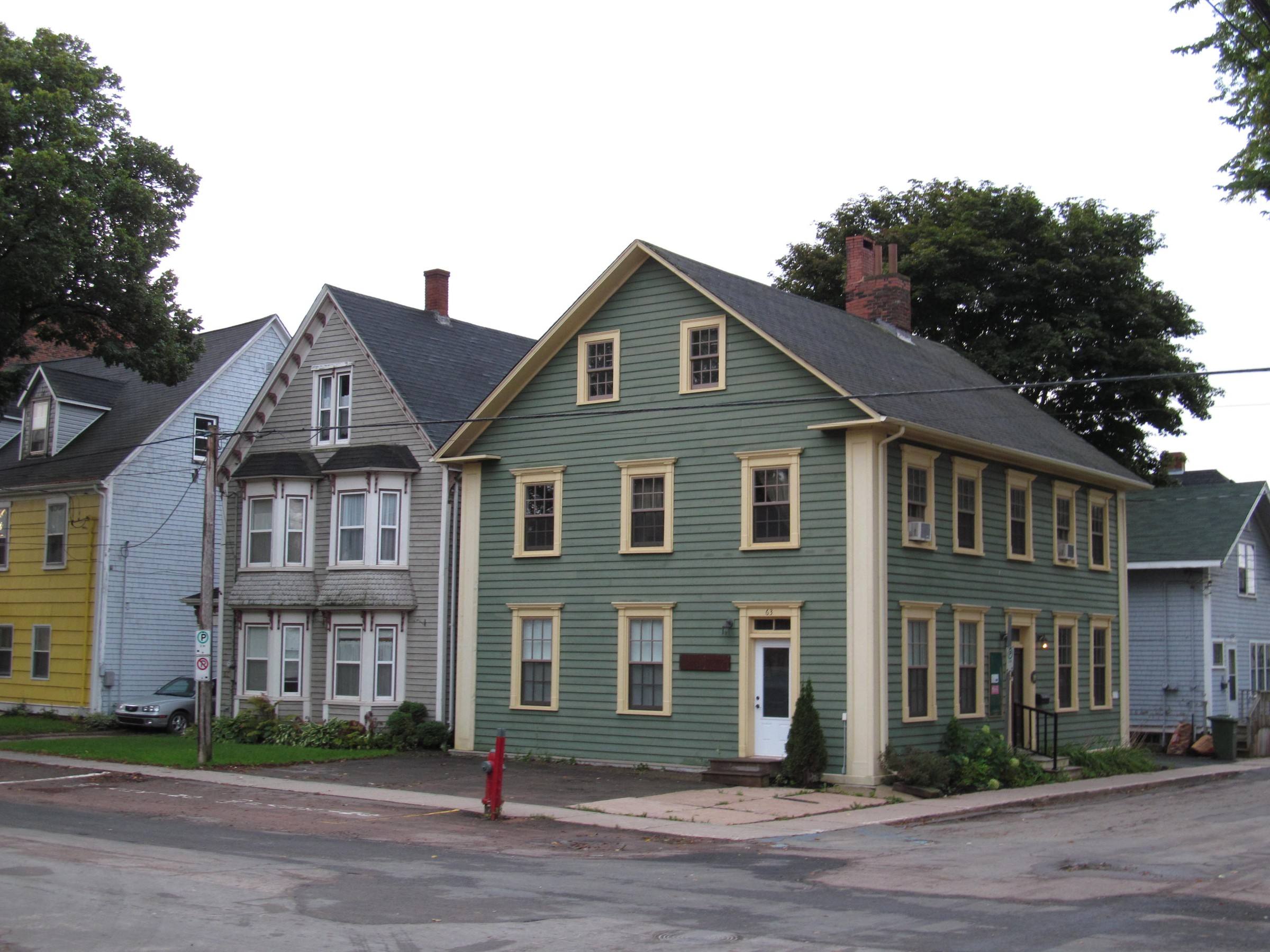

- Median price, single detached homes, Prince Edward Island (no Charlottetown figure in this release)
- $415,000 (up 6.4%)As of Q3 2026.Source
- Residential sales, Prince Edward Island
- 568 (down 7% from Q3 2025)As of Q3 2026.Source
- Population of the City of Charlottetown
- 38,809 (up 7.5% from 2016)As of 2021 Census.Source
- PEI real property transfer tax rate
- 1% of the greater of price or assessed valueAs of 2026.Source
On this page
Charlottetown is the Island’s capital and a small market, and the official numbers come at the Island level rather than for the city alone. That is worth knowing before you work out what your own home might support.
Charlottetown’s price picture
The PEI Real Estate Association, via CREA, reported a third-quarter 2026 median sale price of $415,000 for single detached homes across the Island, up 6.4% from a year earlier. Residential sales for the quarter were 568, down 7%. The release we opened did not include a Charlottetown breakdown, so we do not quote one.
Charlottetown grew 7.5% in five years, reaching 38,809 residents in 2021. Because the Island figures blend many communities, treat them as a rough guide and let a lender’s appraisal settle the question.
A $415,000 Charlottetown home and $82,000 of room
Equity is value minus what you owe. For a second mortgage, the Financial Consumer Agency of Canada gives a limit of 80% of the appraised value, with the mortgage balance subtracted. With a $250,000 first mortgage on a $415,000 home, equity is $165,000 and room is $82,000.
Try the same arithmetic with your own balance in the calculator. The size of the number you can reach, not the size of your equity, sets how much you can use.
PEI’s 1% transfer tax, and why a loan sidesteps it
Prince Edward Island charges a real property transfer tax of 1% of the greater of the purchase price or the assessed value when a deed of conveyance is registered. On a $415,000 purchase that is $4,150. The province can waive the tax for a first-time home buyer who meets its conditions: Canadian citizen or permanent resident, with PEI residence or tax returns, who has never held a principal residence interest and who will live in the home.
The second example shows why this matters to someone using equity to buy a rental: the exemption is built for a first home, so an existing owner should plan to pay the tax. Borrowing against a home you keep is not a deed of conveyance, and we found no transfer tax on it. Other costs are on the Prince Edward Island page.
A smaller market with softer sales
A 7% fall in sales in a market of roughly 570 units a quarter means a few dozen fewer deals. A lender sees few comparables and may ask for a conservative valuation. If your home is unusual, rural-adjacent or on a larger lot, ask how the lender values it. Keep your tax bill, mortgage statement and a list of debts at hand.
What Island owners want from a second mortgage
Owners thinking about buying a rental read the rental property page. Older owners weighing a payment-free option read the reverse mortgage page. Owners fixing up a house read the renovation page.
Mainland neighbours are covered on the Moncton, Halifax and Saint John pages.
If you rely on the first-time buyer exemption
PEI’s exemption has conditions that matter to anyone planning a purchase with borrowed equity. The buyer on the deed must be a Canadian citizen or permanent resident, with six months of PEI residence before registration or PEI tax returns in two of the previous six years. They must never have held a registered interest in a principal residence anywhere and must not have used the exemption before. Where there are several buyers, all must qualify.
The province also expects the buyer to live in the home. If the tax was waived and the buyer does not occupy the home for 183 consecutive days, the tax becomes payable. A parent using home equity to help a child buy should read these rules with a lawyer, because the child’s status, not the parent’s, decides the outcome. The exemption is built for a first home, not for a second property bought by an existing owner.
Have the lender put the amount, the fees and the term in writing before you decide. If the loan is for a purchase, ask your lawyer to work out the transfer tax on the actual price or assessed value, whichever is higher, so the cash figure is complete before you make an offer on a property.
Who to ask on the Island
A licensed mortgage professional in Prince Edward Island can compare lenders. Ask which regulator licenses them before you share documents. For a view of your Charlottetown numbers, try the options check.
A Charlottetown owner borrowing against a $415,000 home
The $415,000 value is PEI's Q3 2026 median for single detached homes, used as a stand-in because no Charlottetown figure was in the release we opened. The $250,000 first mortgage and $45,000 loan are made up. The 80% ceiling is the one the Financial Consumer Agency of Canada gives for a second mortgage.
- Home value used
- $415,000
- Equity before the new loan
- $165,000
- 80% of the home value
- $332,000
- Combined loan-to-value with a $45,000 loan
- 71.1%
- Room left after the new loan
- $37,000
- Room under an 80% ceiling before the loan
- $82,000
$415,000 minus $250,000
$415,000 x 0.80
$295,000 divided by $415,000
$332,000 minus $295,000
Cash to close on a $415,000 Charlottetown rental, set against home equity
A made-up purchase of a rental at $415,000, matching the Q3 2026 PEI detached median. The 20% down payment is an assumption, since lenders often ask for more on a rental. The 1% transfer tax is the PEI rate on the greater of price or assessed value, assumed here to be the price, and no exemption applies. Legal fees are left out. The $82,000 is the room from the first example.
- Purchase price
- $415,000
- Down payment at 20%
- $83,000
- Transfer tax at 1%
- $4,150
- Cash needed before legal fees
- $87,150
- Room available from the owner's home
- $82,000
- Shortfall before legal fees
- $5,150
$415,000 x 0.20
$415,000 x 0.01
$83,000 plus $4,150
Questions people ask
Which Charlottetown price helps me estimate my equity?
The PEI Real Estate Association figures we could open cover the whole Island, so this page uses the $415,000 provincial detached median for Q3 2026 as a stand-in. Your appraisal is what a lender will use, and it can differ by street.
Is PEI's transfer tax payable when I borrow against my own home?
The 1% real property transfer tax applies when a deed of conveyance is registered after a purchase. A loan secured on a home you keep is not a conveyance, so we found no such tax for it. Your lawyer will confirm the fees.
First-time buyer exemption: does it cover a rental purchase in Charlottetown?
The province waives the tax only for a first-time buyer who has never held a principal residence interest and who will live in the home. An owner who already holds a home, or buys to rent out, would normally pay the 1%.
Are Island sales slowing in 2026?
The PEI Real Estate Association reported 568 residential sales in the third quarter of 2026, down 7% from the same quarter in 2025, while the detached median rose 6.4%. Fewer sales at higher prices means a lender may ask more of your appraisal.
Reverse mortgage or second mortgage in Charlottetown: which makes more sense?
For some older owners with no wish to make payments, perhaps. A reverse mortgage is repaid when the home is sold or you move, and it can use up equity quickly. Read the reverse mortgage page before deciding.
Sources
- PEI Real Estate Association via CREA: median price, Q3 2026, 2026-09
- PEI Real Estate Association via CREA: residential activity, Q3 2026, 2026-09
- Statistics Canada: Focus on Geography, 2021 Census, Charlottetown
- Government of Prince Edward Island: Real property transfer tax, first-time home buyers exemption
- Financial Consumer Agency of Canada: Borrowing against your home equity